
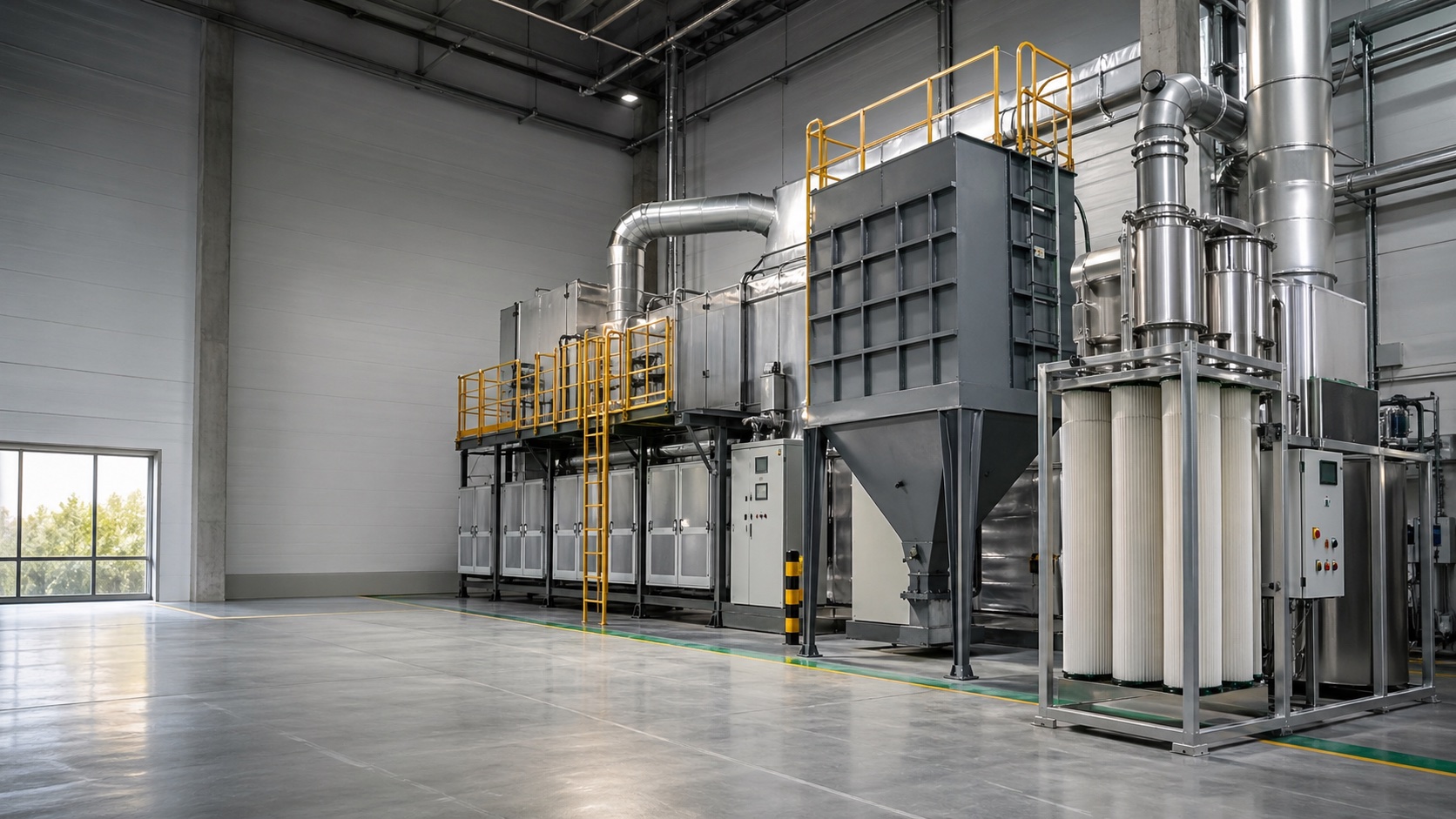
The Core Technologies: RTO vs. SGTO
When it comes to the thermal oxidation of pentane, two proven technologies dominate the market:
Regenerative Thermal Oxidizer (RTO)
High thermal efficiency, often up to 95%+, makes it ideal for consistent, long-term VOC abatement with minimal fuel consumption.
Steam Generating Thermal Oxidizer (SGTO)
A versatile solution that destroys pentane while recovering energy to produce steam, a critical utility in the EPS expansion process.
The Most Critical Component: The Pentane Collection System
While the destruction unit is the engine, the collection system is the heart of the project. A high-performance collection system designed by AuSSE focuses on three strategic pillars:
Safety First
Pentane is highly flammable. Every collection point must be engineered to maintain concentrations well below the Lower Explosive Limit (LEL).
Maximum Capture Efficiency
To meet stringent regulatory requirements, the system must capture the highest possible percentage of emissions before they escape into the factory atmosphere.
Recirculation & Cost Reduction
By identifying areas where air can be recirculated, the total air volume sent to the RTO can be reduced. This lowers both CAPEX and OPEX by allowing for a smaller, more efficient destruction unit.
Where Does Pentane Escape? Analyzing the Molding Process
Understanding the emission profile is key to effective capture. In a typical EPS facility, pentane is released at various stages:
- 1
Raw Material Handling (Pre-Expansion)
Raw polystyrene beads typically contain pentane levels ranging from 3.5% for ultra-low grades to as high as 11% for specialized products.
During distribution and box opening, approximately 2% of pentane is released as soon as the material is dumped into distribution containers.
- 2
The Pre-Expander & Fluid Bed Dryer
This is a high-emission zone. As steam expands the beads in the chamber and drying air is introduced in the fluid bed, roughly 23% of total pentane is released during this stage.
- 3
Silo Aging: The 24-Hour Peak
After expansion, beads are transported to silos for aging. While they initially cool and pull air in, the following 24 hours are critical.
Approximately 30% of pentane fumes are emitted from the silos during this period.
- 4
The Molding Process (Block & Shape Molding)
As the beads are fused into their final shapes, another 16% of pentane is released during molding.
- 5
Post-Molding Drying & Storage
The journey does not end at the mold. The drying process accounts for 14% of emissions.
Only about 15% of the original pentane remains in the finished product shipped to customers.
Planning an EPS Pentane Control Project?
AuSSE can help evaluate capture points, recirculation opportunities, air volume reduction and RTO or SGTO sizing for your facility.
Contact our engineering team