
For industrial VOC treatment systems, operational reliability is just as important as treatment efficiency. Unexpected equipment failures, valve malfunctions, or maintenance requirements can interrupt production and affect exhaust gas treatment performance. A five-chamber Regenerative Thermal Oxidizer (RTO) is designed with independent regenerative chamber sections and specialized switching valve technology to improve system availability and operational safety. By allowing the AB and DE chamber sections to operate independently and serve as backups for each other, the system can maintain treatment capability when one section encounters a fault. In addition, its pneumatic switching valve design incorporates specialized sealing structures, position monitoring, and pressure safety considerations. This article explains the redundancy concept, independent operating modes, and key valve design features that contribute to the reliability of a five-chamber RTO.
1. Independent Operation of Regenerative Chamber Sections The five-chamber RTO consists of two regenerative chamber sections, AB and DE, which share a central purge chamber C. Unlike a configuration in which all regenerative chambers must operate as one inseparable unit, the AB and DE sections can operate independently according to the system configuration and control requirements. This independent arrangement provides greater flexibility in equipment operation and maintenance. Each section can perform its designated treatment function without requiring the other section to operate in the same configuration. The central C chamber serves as a shared purge chamber, supporting the operation of both regenerative sections.
2. Redundant Operation and Backup Capability One of the key design advantages of the five-chamber RTO is the mutual backup capability between the AB and DE regenerative chamber sections. Under normal operating conditions, both sections can participate in the treatment process according to the configured operating mode. When one section encounters a fault, the other section can be operated independently, subject to the system control logic and operating requirements.
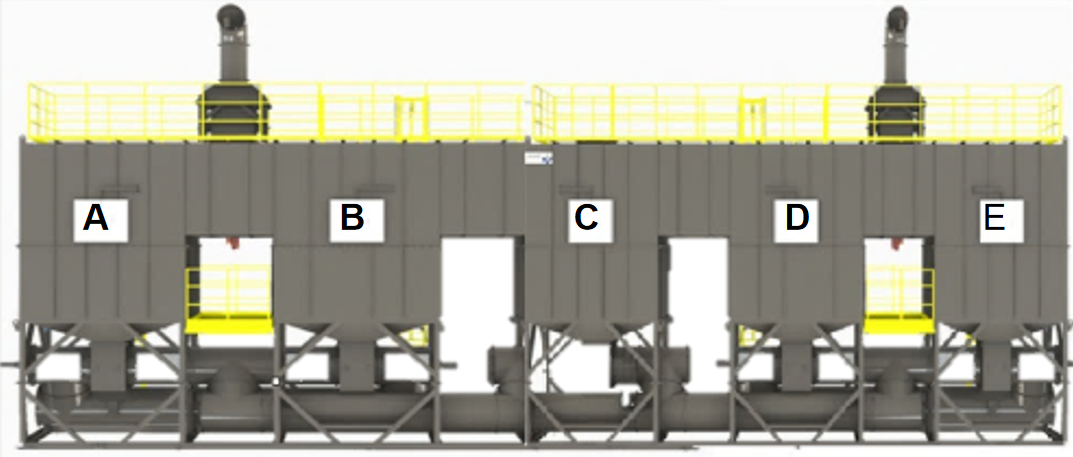
2.1 Independent Operation Modes The five-chamber RTO supports different chamber operating combinations, allowing the system to adapt its operation to equipment conditions and process requirements. The AB and DE sections can operate independently or simultaneously, with the central C chamber providing a shared purge function. This flexible operating arrangement allows the system to select an appropriate operating configuration rather than relying on a single fixed operating mode. 2.2 Mutual Backup Between AB and DE When a fault occurs in the AB chamber section, the DE section can be operated independently to maintain exhaust gas treatment, instead of allowing a fault in AB to automatically interrupt the entire RTO system. Similarly, the AB section provides backup capability for the DE section. This mutual backup arrangement helps reduce the impact of localized equipment faults on overall system operation and provides greater flexibility for maintenance and troubleshooting. The actual available treatment capacity during backup operation depends on the equipment configuration, process conditions and control strategy.
3. Specialized Switching Valve Design Switching valves play an essential role in regenerative thermal oxidizers. They control the direction of gas flow through the regenerative chambers and must operate repeatedly under demanding industrial conditions. The five-chamber RTO uses a specialized pneumatic switching valve system designed to simplify the valve structure and improve switching reliability.
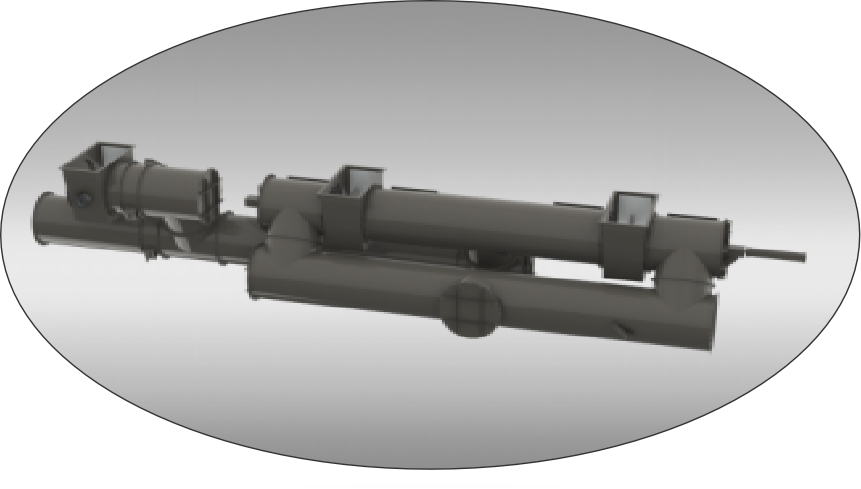
3.1 Single-Cylinder Switching Valve Structure AuSSE uses a single-cylinder valve system to control switching between regenerative chambers. Compared with a multi-valve arrangement, this design simplifies the switching structure and reduces the number of components involved in the switching operation. The valve is driven by a pneumatic cylinder and operates according to commands from the RTO control system, changing the airflow direction between the designated regenerative chambers. 3.2 Soft Valve Seat and Buffer Stroke Design The switching valve incorporates a proprietary soft valve seat design and buffer stroke control. The soft valve seat helps maintain sealing performance, while the buffer stroke design helps control valve movement during opening and closing. These features are intended to support smooth valve operation and reduce the impact associated with repeated switching movements.\
4. Valve Sealing and Leakage Control Valve sealing performance is critical to the reliable operation of an RTO. Poor sealing may lead to gas leakage between different flow paths and affect the overall treatment process. The five-chamber RTO incorporates several design features to maintain valve sealing performance.
4.1 Position Sensors for Valve Monitoring Position sensors are installed to monitor valve positions and confirm that the valves reach their designated positions during operation. This monitoring function helps the control system identify valve movement conditions and supports accurate execution of the programmed switching sequence. 4.2 Automatic Sealing Adjustment The valve incorporates an internal sealing mechanism with automatic adjustment capability. When wear occurs during repeated valve operation, the adjustment mechanism helps compensate for changes in the sealing structure and maintain sealing performance. This design helps reduce the impact of normal operating wear on valve sealing. 4.3 Low Leakage Performance With its specialized valve structure and sealing design, the five-chamber RTO is designed to maintain a valve leakage rate of no more than 0.5%. The system uses four valves and four actuators, helping simplify the overall valve configuration and reduce the number of components in the switching system.
5. Operational Safety and Long-Term Reliability In addition to switching performance and sealing capability, the five-chamber RTO incorporates design considerations for long-term operation and equipment safety. 5.1 Pressure Safety Design The system is designed to maintain communication between the combustion chamber and the atmosphere regardless of the switching valve position or the timing of a valve fault. This arrangement helps prevent pressure from becoming trapped inside the equipment and reduces the risk of abnormal internal pressurization. 5.2 Valve Warranty and Service Life Under the specified operating conditions, the switching valves are covered by a five-year warranty, excluding damage caused by corrosion. The specialized valve seat, buffer stroke control, and automatic sealing adjustment mechanism are designed to support long-term operation and maintain sealing performance during repeated switching cycles.
Conclusion The five-chamber RTO combines independent regenerative chamber operation with specialized switching valve technology to improve operational reliability. The AB and DE chamber sections can operate independently and provide mutual backup capability, helping reduce the impact of localized equipment faults on the overall treatment system. At the same time, the single-cylinder switching valve structure, soft valve seat design, buffer stroke control, position sensors, and automatic sealing adjustment mechanism work together to support reliable switching and low leakage performance. With a simplified valve configuration, a designed leakage rate of no more than 0.5%, and pressure safety considerations, the five-chamber RTO provides an integrated approach to reliable industrial VOC treatment.
Need help with industrial air pollution control?
AuSSE engineering can support VOC treatment, dust collection and filtration system planning for your facility.
Contact our engineering team